Conéctese con nuestro equipo

Conéctese con nuestro equipo
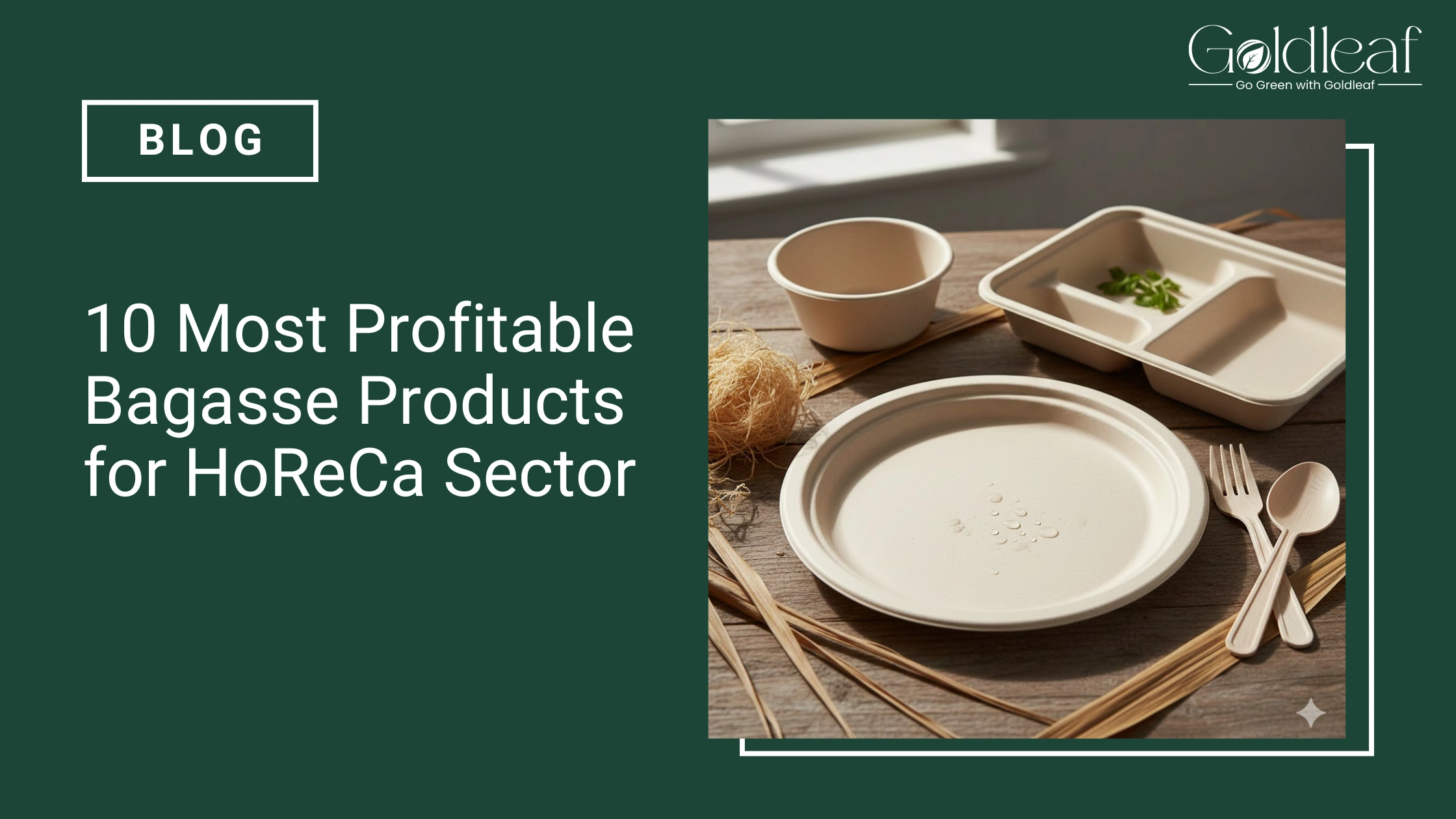
The HoReCa sector is evolving rapidly due to sustainability demands, plastic bans, and rising customer awareness. Restaurants, hotels, cafés, and cloud kitchens are now actively shifting toward bagasse products as a reliable and profitable packaging solution across the global HoReCa sector.
Made from sugarcane residue, bagasse packaging offers durability, food safety, and excellent cost efficiency. As food delivery and takeaway options continue to surge, the demand for strong yet biodegradable packaging is rising at an unprecedented pace.
Bagasse packaging aligns perfectly with the daily operational needs of HoReCa businesses. It performs consistently in real kitchen conditions while meeting sustainability guidelines.
Key reasons for its rapid adoption include:
Growing government restrictions on plastic
Rising consumer preference for eco-friendly packaging
Strong compatibility with hot, cold, and oily foods
From both an environmental and business standpoint, bagasse has become a long-term packaging standard rather than a temporary alternative.
Profitability in HoReCa depends heavily on products with repeat daily demand. Packaging is a consumable that restaurants reorder continuously, making bagasse a high-volume revenue category.
Its profitability is supported by:
Low raw material cost (agricultural waste)
Bulk purchase models
Stable resale margins for distributors
With strong branding appeal and compliance benefits, bagasse delivers both volume sales and brand value.
Bagasse performs exceptionally well in professional food service environments. It is heat resistant, oil resistant, leak proof, and microwave safe making it ideal for daily commercial use.
Additional performance benefits include:
Strong structural integrity for stacking
Lightweight for transport
Hygienic and food-safe certified composition
These features make bagasse packaging operationally efficient and legally safe for HoReCa buyers.

Bagasse plates are versatile, round or square molded dishes available in sizes from 6 to 12 inches, perfect for appetizers, mains, or desserts. They withstand hot and cold foods without sogginess, making them a staple in restaurants for dine-in and buffets, hotels for room service, and catering for events.
Profitability stems from their dominant market position, holding a projected 78.4% share in the USA by 2035. High B2B demand on platforms like Alibaba sees prices at $0.02-$0.03 per unit for minimum orders of 10,000, with a 41% global market share in 2025. Their bulk sales potential and alignment with takeout trends make them highly lucrative, offering quick ROI through reduced waste costs.
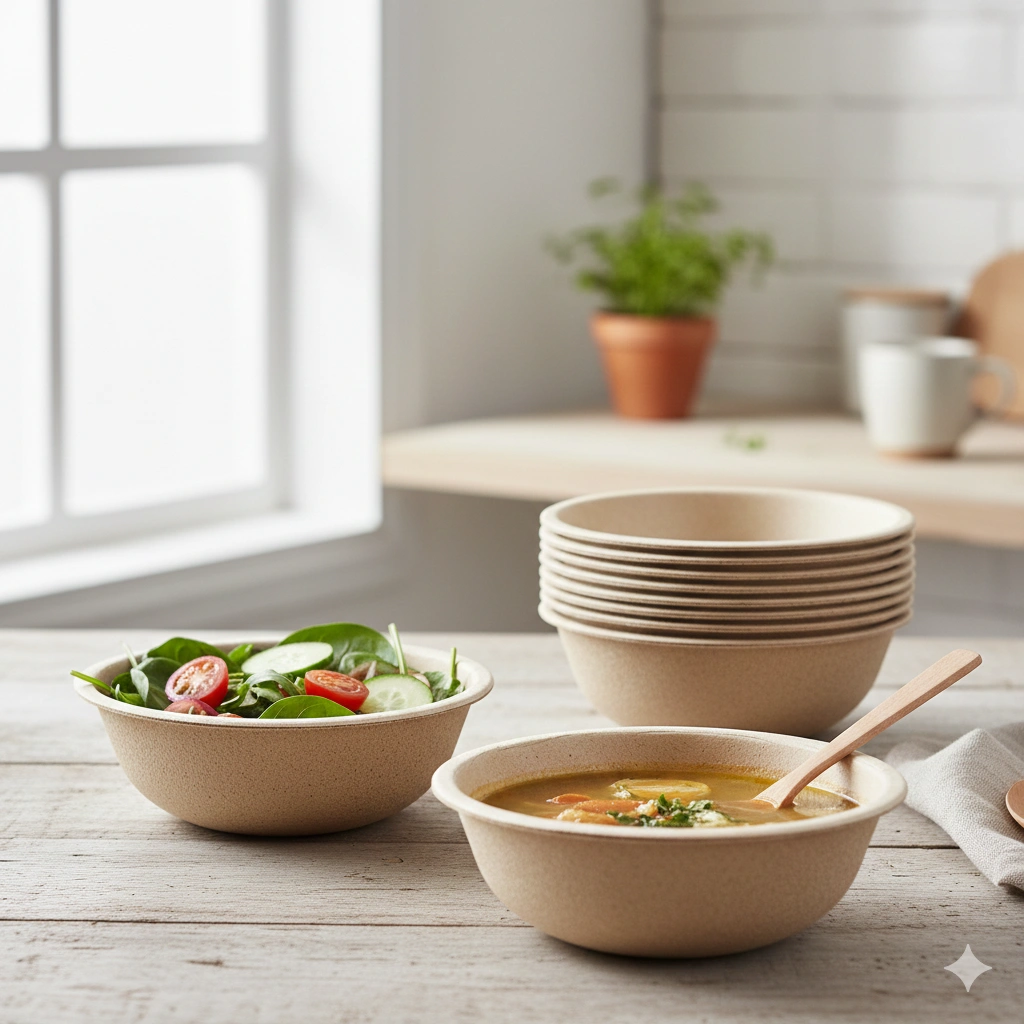
These deep, durable containers come in capacities from under 12 oz to over 16 oz, ideal for soups, salads, stews, or ramen. In HoReCa, they're used in cafeterias, food trucks, and catering for portion control and easy transport, with leak-proof designs ensuring hot deliveries remain intact.
As the second-leading product, bowls capture over 26% market share, driven by versatility in food applications like ready-to-eat meals. B2C sales volumes reach 1,943 units for 500-count packs at around $40, while B2B scalability enhances margins. Profitability is boosted by growing demand in commercial settings, where they replace foam bowls, leading to 20% savings in disposal.
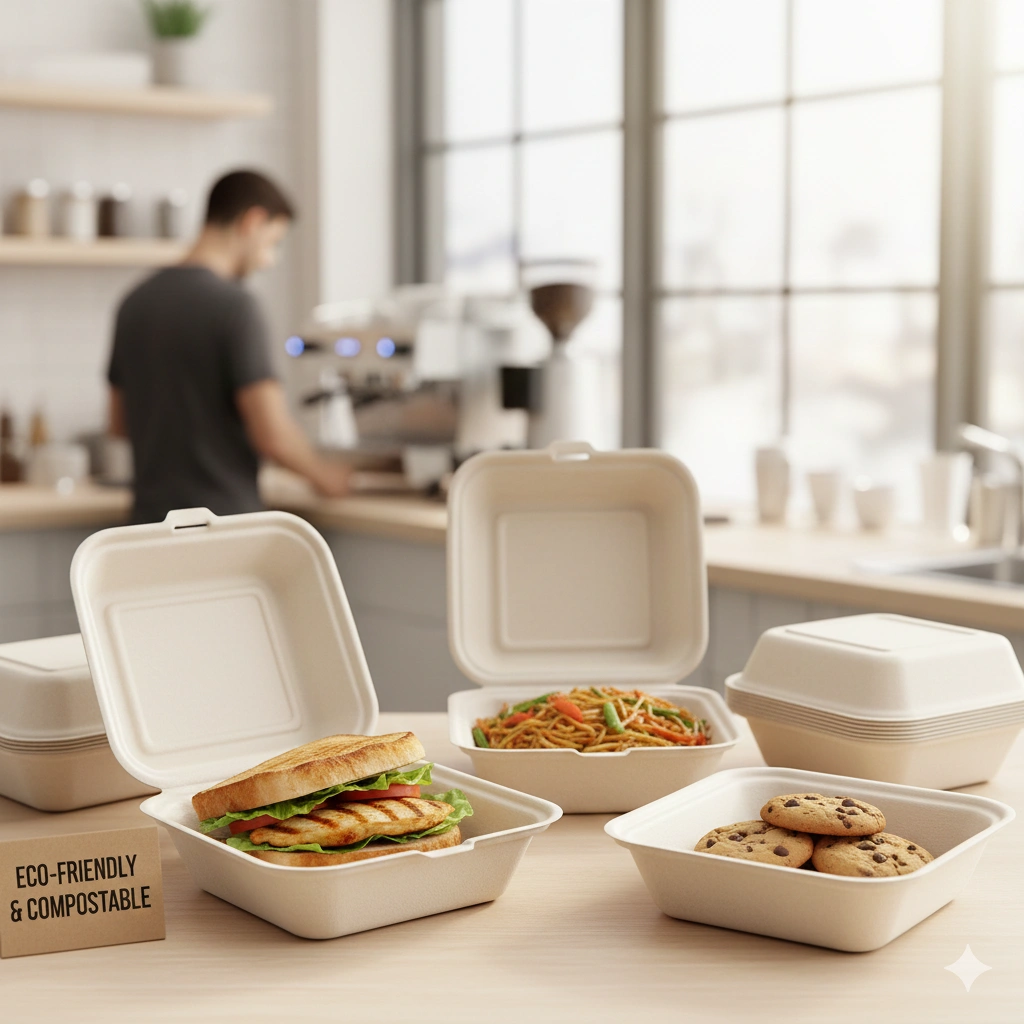
Hinged, multi-compartment boxes for burgers, lunches, or meals, these are compostable and heat-resistant, suited for takeout in restaurants, hotel deliveries, and catering services. They prevent leaks from greasy foods, maintaining presentation during transport.
Clamshells command significant packaging market share, with B2B sales up to 1.4 million units on Alibaba at $0.02-$0.04 each. Their popularity in fast-food chains contributes to high profitability, especially amid post-COVID takeout surges, with global growth projections supporting steady demand.

Rectangular or round bagasse boxes with separate lids, these are designed for salads, poke bowls, or entrees, offering stackability for efficient storage in hotels and restaurants. They're freezer- and microwave-safe, ideal for meal prep in catering.
High-volume B2B sales reach 1.2 million units at $0.04-$0.07 per piece, reflecting strong profitability through bulk orders. As part of the food container segment, they benefit from 75% market focus on food applications, driving margins via regulatory compliance savings.

Multi-section trays for separating mains, sides, and sauces, these are popular in catering events, banquets, and school/hotel cafeterias. They provide organized presentation and portion control, reducing food waste.
Featured in HoReCa for professional setups, their profitability lies in versatility for buffets, with market trends favoring compartment designs for convenience. Bulk pricing and high demand in institutional uses enhance returns, aligning with 59% commercial adoption rates.

Flat or shallow platters for fruits, bakery items, or appetizers, these support large servings in hotels and catering halls. Microwavable and sturdy, they're suitable for outdoor events or conferences.
Trays contribute to the platter segment's growth, with profitability from economies of scale in events where disposable needs spike. Their role in venues and catering boosts sales, especially in regions with plastic bans.

Small to medium fiber pulp cups for condiments, hot drinks, or short-term use, often paired with lids. In HoReCa, they're used in coffee stations, bars, and catering for beverages, with heat-tolerant properties.
Though secondary to plates, cups tap into beverage applications, with market growth from chains like Starbucks. Profitability comes from add-on sales and bulk distribution, reducing plastic cup costs.

Secure, fitted lids for cups or bowls, ensuring spill-proof transport in takeout and delivery. They're essential for hotels' room service and restaurants' to-go orders.
Lids enhance container profitability by completing sets, with demand tied to takeout trends projecting 10% CAGR in some forecasts. Low production costs make them high-margin accessories.

Molded forks, knives, and spoons, sometimes blended with other fibers for strength. Used in catering kits and restaurant takeout, they offer a full eco-set.
Cutlery's inclusion in tableware kits drives profitability through bundled sales, aligning with full-service HoReCa needs. Growing adoption reduces reliance on plastic utensils.

Multi-slot trays for holding cups, ideal for coffee runs in hotels or catering deliveries. They provide stability and branding opportunities.
As an accessory, carriers profit from event and venue uses, with market expansion in mobile food services enhancing bulk sales potential.
HoReCa buyers follow a structured evaluation process before finalizing bagasse suppliers. Their primary focus is operational efficiency, food safety, cost control, and regulatory compliance. Packaging failures result in food leakage, customer complaints, and brand damage making quality a non-negotiable factor.
The most important buying factors include:
Portion size compatibility with menu items
Structural thickness and GSM quality
Usage for hot, cold, and oily food
Stackability for storage and transport
Custom branding support for restaurants
Bulk buyers also examine supplier reliability, delivery timelines, quality consistency, and reordering flexibility. A slight price difference is acceptable if it guarantees consistency and reputation safety.
Plastic packaging may appear cheaper in short-term procurement, but its long-term business risks are increasing rapidly. Plastic bans, compliance penalties, and sustainability regulations are tightening across India and global markets.
Bagasse offers multiple commercial advantages:
Zero plastic compliance risk
No chemical migration into food
Better brand perception among eco-conscious customers
Easy approval for export documentation
From a financial perspective, HoReCa brands that shift to bagasse often observe higher customer trust, increased repeat ordering, and improved corporate sustainability ratings directly supporting revenue stability.
Yes, bagasse packaging is fully safe for hot, oily, and moist food items. It naturally withstands high temperatures without bending, leaking, or releasing harmful chemicals.
Bagasse easily handles:
Deep-fried foods
Indian curries and gravies
Steamed rice dishes
Saucy continental meals
Unlike plastic, bagasse does not trap condensation or soften under heat exposure. This makes it suitable for both dine-in serving and long-distance deliveries.
At present, bagasse food containers and bagasse takeaway boxes dominate the HoReCa packaging market. Their demand is driven by:
Rapid expansion of cloud kitchens
Growth of Swiggy, Zomato, and Uber Eats deliveries
Increased preference for takeaway meals
Clamshells and bowls follow closely due to fast food demand and health-focused food brands. However, daily meal containers remain the strongest volume driver.
Sugarcane containers outperform plastic in nearly all areas of food packaging performance. They provide superior heat insulation without creating steam lock, keeping food texture intact during transit.
From a branding perspective, sugarcane containers offer:
Premium dining experience
Clean and modern presentation
Strong eco-conscious consumer appeal
For premium cafés and hotels, sugarcane packaging is both a functional and brand marketing investment.
The global push toward sustainability is accelerating, not slowing. Governments, food delivery platforms, investors, and customers are collectively enforcing eco-friendly packaging standards. This ensures that demand for bagasse products will continue rising for the next decade.
With manufacturing automation and supply-chain optimization, production cost is expected to decrease further. This will directly enhance profit margins for manufacturers, wholesalers, exporters, and distributors.
Bagasse has transitioned from being an eco-friendly option to becoming a commercial necessity for the HoReCa industry. From bagasse food containers to sugarcane containers, each category delivers high repeat demand, regulatory safety, and strong profit stability.
With tightening plastic regulations, rising environmental awareness, and continuous food delivery expansion, bagasse products in the HoReCa sector represent one of the most future-proof segments of modern food packaging. Businesses that adopt early secure long-term advantages in profit, compliance, and brand trust.
Yes, bagasse products are microwave safe and can handle reheating without releasing harmful chemicals or losing structural stability.
Bagasse packaging typically decomposes within 60–90 days under proper composting conditions, making it far more sustainable than plastic.
Yes, bagasse containers are freezer-friendly and retain their shape even at low temperatures, making them suitable for frozen food storage.
Cloud kitchens, QSR chains, cafés, hospitals, and airline catering services benefit the most due to their high packaging consumption.
Yes, custom logo embossing and printed branding are widely supported on bagasse packaging for restaurant brand promotion.
Goldleaf India Es un fabricante líder de productos de bagazo ecológico. Nuestros productos de bagazo están hechos de pulpa de caña de azúcar renovable, que es un subproducto de la industria del azúcar.
© 2024 , Goldleaf ,
Reservados todos los derechos.
Made & Managed by Lightlink Solutions